the raincoat killer ; Yoo Young-chul .
In this True Crime documentary, we review Korea’s Serial Killer, Yoo Young-Chul, and how he managed to evade officers and even make them believe he was two seperate killers.
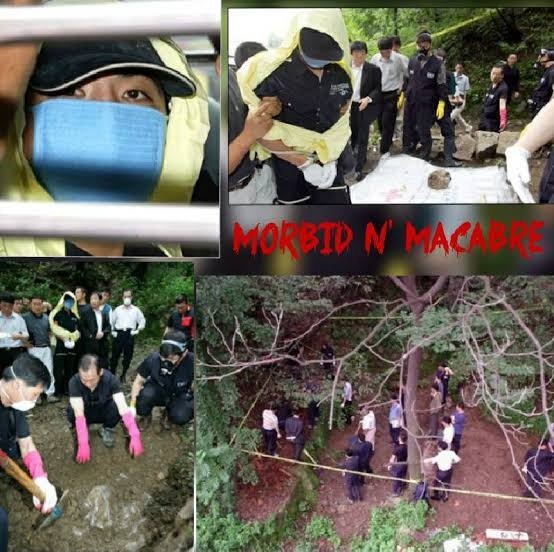
The “Raincoat Killer” is the chilling moniker given to Yoo -chul, one of South Korea’s most notorious and prolific serial killers. Operating between September 2003 and July 2004, Yoo terrorized Seoul, brutally murdering at least 20 people. His moniker stems from a yellow, hooded raincoat he wore during a highly publicized police reconstruction of his crimes following his arrest.
Yoo’s case exposed deep systematic flaws in early 2000s South Korean law enforcement, ultimately revolutionizing the country’s approach to profiling and forensic investigations.
The Wealthy Elderly: In the first phase of his spree, Yoo broke into the isolated, affluent homes of elderly citizens in upscale Seoul neighborhoods. He bludgeoned them to death using a heavy, custom-made iron hammer that he fashioned himself. He frequently staged the scenes to look like robberies gone wrong, though he rarely stole anything.
Female Sex Workers / Masseuses: When police heightened security around wealthy neighborhoods, Yoo shifted tactics. He began calling female masseuses and escorts to his apartment in Seoul. Once there, he bludgeoned them, dismembered their bodies in his bathroom, and buried their remains in shallow graves in the mountains surrounding local temples.
To evade forensic detection, Yoo mutilated his victims’ fingerprints and went as far as burning bodies or setting fire to crime scenes. During his later interrogation, Yoo claimed to have consumed the internal organs of some of his victims to “cleanse his spirit,” though prosecutors were never able to forensically prove his acts of cannibalism.
The Seoul Metropolitan Police initially failed to link the separate strings of murders. The breakthrough occurred when an alert owner of an escort service noticed that multiple employees had vanished after being dispatched to the exact same telephone number.
The business owner, along with a group of escorts, ambushed Yoo at a designated meeting location in July 2004 and held him until police arrived. Though Yoo briefly escaped police custody by exploiting a lapse in supervision, he was re-arrested 12 hours later. He subsequently confessed to the killings and calmly led detectives to the mountain sites where he had buried his victims.
The Verdict: Yoo showed no remorse during his trial, stating that his only regret was that he hadn’t killed more people.
Current Status: The Supreme Court of Korea upheld his death sentence in 2005. However, South Korea has maintained a moratorium on executions since December 1997. As a result, Yoo remains incarcerated at the Seoul Detention Center as a death row inmate serving out a de facto life sentence