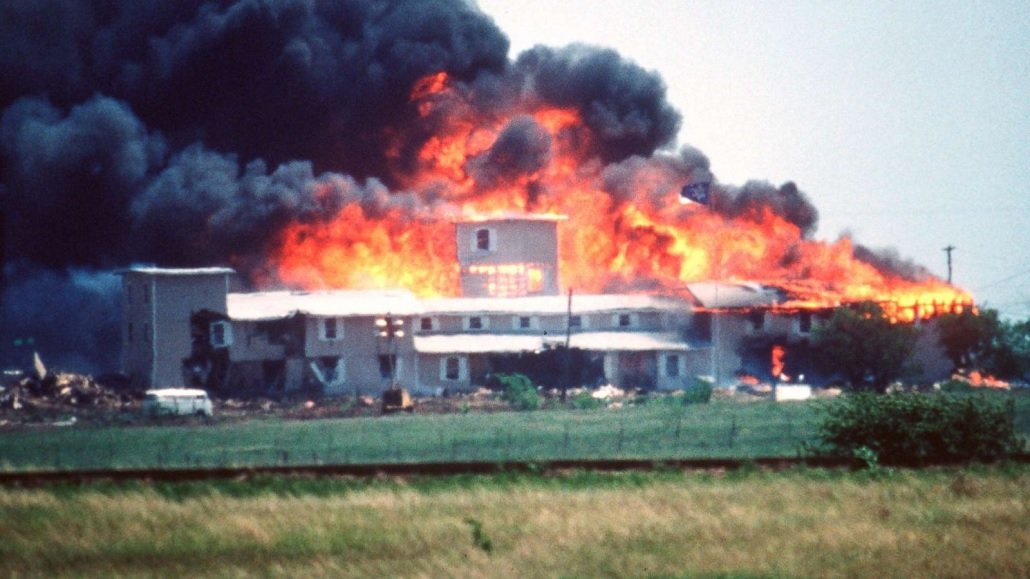
The Waco siege was one of the most controversial law enforcement confrontations in modern American history. In February 1993, federal agents from the Bureau of Alcohol, Tobacco, and Firearms (ATF) attempted to execute a search warrant at the Mount Carmel compound near Waco, Texas, home to the Branch Davidians, a religious sect led by David Koresh. The raid quickly erupted into a gun battle that left four federal agents and six Branch Davidians dead.
After the failed raid, the FBI took control of the situation, initiating a 51-day standoff with Koresh and his followers inside the compound. The siege ended on April 19, 1993, when federal agents launched an assault using tear gas to force the group out. A fire broke out during the operation, engulfing the compound and killing 76 Branch Davidians, including women and children.
The Waco siege sparked intense debate about federal authority, religious freedom, and the use of force by government agencies, and it remains a defining moment in discussions about government power, civil liberties, and domestic extremism in the United States. Most people around the world had never heard of the “Branch Davidians” led by the controversial self-proclaimed prophet David Koresh until the beginning of a 51 day siege at their 77-acre Mount Carmel compound where 130 members had resided.